PDP-1: UNDERSTANDING
PAPER TAPE FORMATS
Work in Progress
CONTENTS
Introduction
Alphanumeric (symbolic) tape format
Binary tape format
Binary RIM blocks
Binary BIN blocks
Introduction
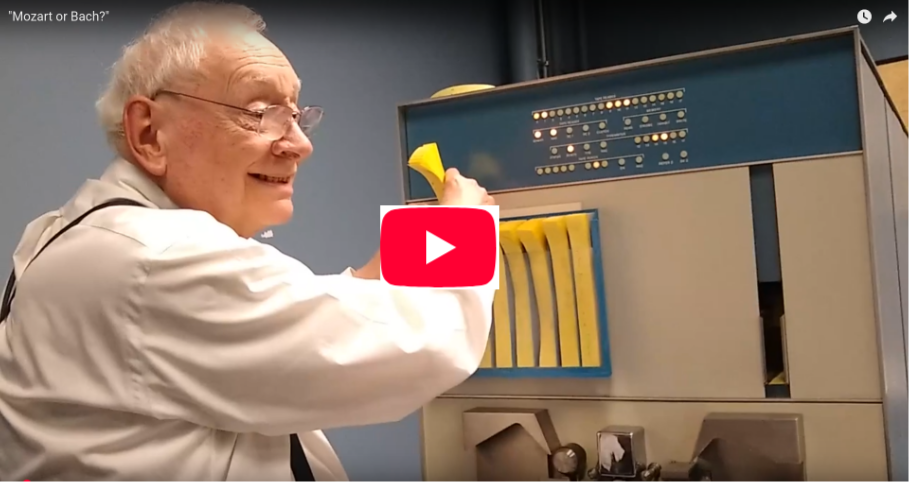 'Mozart or Bach' - Samson at the CHM
A good introduction to the pre-history of music & computers: Composers & Computers, a podcast. Though they've not yet reached the PDP-1...
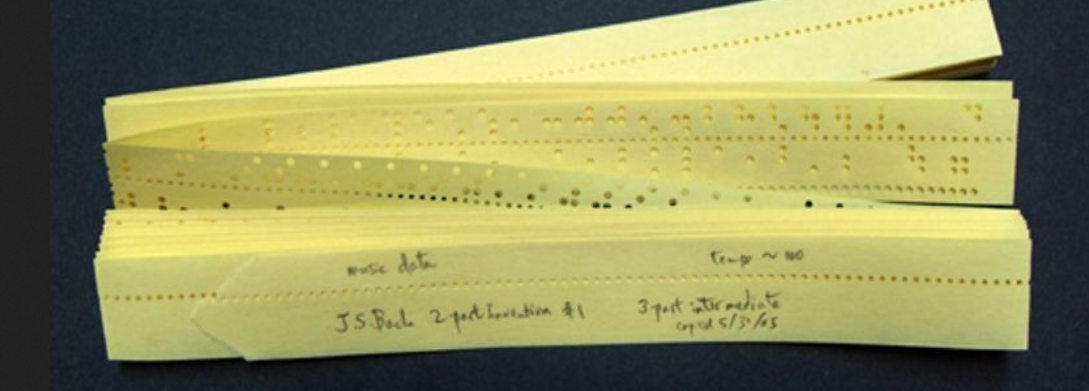
Paper tape: formats for alphanumeric and binary data
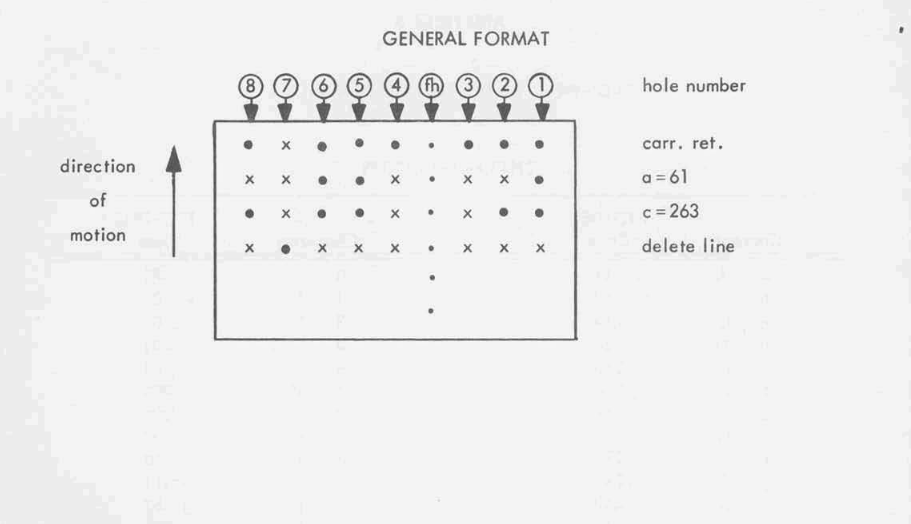
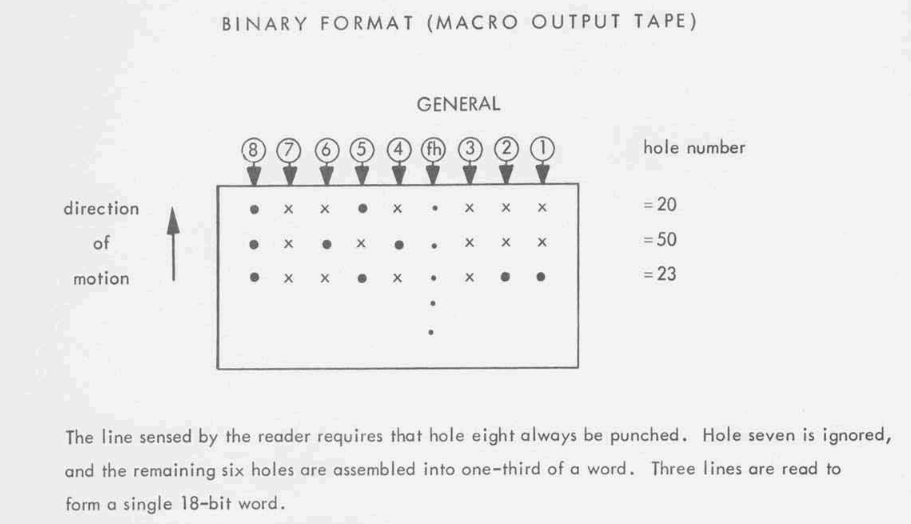
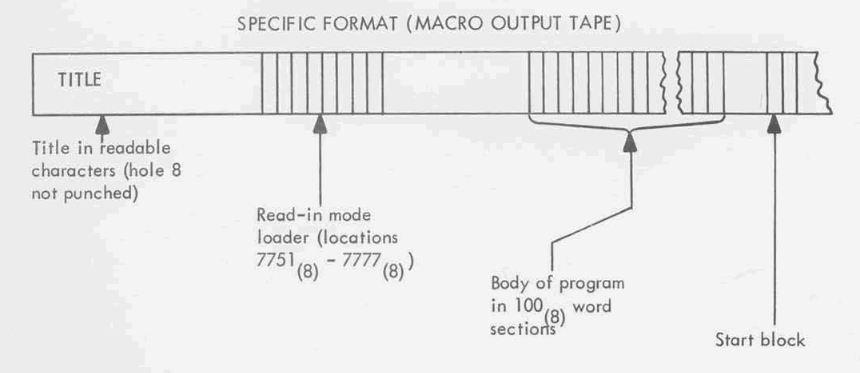
The BIN loader is loaded in at the top of the memory map by the hard-wired circuits behind the 'READ IN' switch. In its details, this is a very neat trick worth studying. After the BIN loader is read, it starts executing to load the rest of the tape. Once it hits the start block, execution is transferred to the actual program.
Note that a binary tape does not have to have the BIN loader. That just makes it read data in more efficiently, if you want to call it that! DDT is often used to read binary tapes without a BIN loader.
Alphanumeric tapes are simpler, of course they might have the human-readable title punched out before the actual file, but there's no BIN loader or start block of course. What there might be (sometimes, must be) is a STOP block at the end of the punched data. Octal code 013, the STOP character, demarks the End-Of-File. Not all alphanumeric tapes have it! It depends on the program that they are intended for. But MACRO certainly wants it.